The 9-Month Sleep Regression: Signs and What Helps
At 9 months, a rough sleep stretch usually isn't mysterious — it's a busy brain and body: separation anxiety, standing practice, new teeth, and a nap schedule finishing a big shift, all landing close together.

Safe sleep reminder: Always place baby on their back to sleep, on a firm, flat sleep surface in their own crib, bassinet, or play yard, with a fitted sheet only and no loose blankets, pillows, bumpers, stuffed animals, or other soft items.
What’s actually going on at 9 months
Sleep regressions don’t arrive on a fixed calendar — there’s no reliable evidence for that. What’s true is that certain contributing factors cluster at certain ages, and 9 months sits in the middle of a genuinely busy developmental stretch:
- Separation anxiety is in full swing. It commonly emerges or intensifies across the roughly 8-14 month window, tied to your baby’s dawning sense of being a separate person and their new grasp that you still exist when out of sight (object permanence). At bedtime it can show up as fresh clinginess or crying at separation from a baby who used to settle easily.
- Mobility is peaking as a sleep thief. Crawling and pulling to stand are new and thrilling, and babies practice new skills wherever they are — including the crib, in the middle of the night.
- The nap schedule just changed. Most babies fully drop their third nap somewhere around 6-9 months. If your baby moved to 2 naps recently, the new rhythm — longer wake windows, naps still finding their length — can carry a few uneven weeks with it.
- Teeth keep coming, and the discomfort generally lasts a matter of days before easing.
And underneath, the same mechanism as always: everyone briefly rouses between sleep cycles. A baby who falls asleep independently at bedtime tends to link cycles without fully waking; a baby who’s fed, rocked, or held to sleep often needs that same help at each brief waking.
What it looks like
More night waking than your baby’s own baseline, harder settling, naps that shrink or get skipped, and — new at this age — a baby who stands up in the crib or cries the moment you leave the room. Duration follows the cause: teething and illness usually run their course within about a week; the adjustments around a fresh nap transition play out over several weeks; a sleep-onset association persists until your baby has practiced settling another way.
One number worth knowing: if night sleep dips to around 10 hours during this stretch, that’s considered a normal side effect of lengthening wake windows. It tends to lengthen again once the next nap transition — the move to one nap, typically at 14-18 months — has passed.
Sleep at 9 months, at a glance
| What | Typical at 9 months |
|---|---|
| Total sleep (24 hrs) | ~14 hours |
| Night sleep | 11-12 hours |
| Daytime sleep | 2-3 hours over 2 naps |
| Wake windows | ~2.75-3.5 hours |
| Bedtime | About 12-13 hours after morning wake-up, not before 6:00 PM |
General guides, not strict targets — there’s a wide range of normal at every age.
A schedule shift worth making at this age
Nine months marks a real turning point in how to time sleep. Under about 9 months, your baby’s sleepy cues — yawning, a glazed look, slowing down — are usually a more reliable signal than the clock. Past this point, cues become less dependable, and a steadier by-the-clock schedule usually does more of the work: naps and bedtime at roughly the same times each day, anchored by a consistent morning wake-up (within about 30 minutes day to day). If your baby’s sleep has felt unpredictable lately, this shift alone often steadies it.
What helps, calmly
- Hold the routine steady. The same steps in the same order every night is what cues sleep — and during a clingy, unsettled stretch, the familiar sequence is itself a comfort.
- Anchor the first nap at a consistent time; the rest of the day’s rhythm follows from it.
- Keep the room dark. Darkness helps your baby link sleep cycles instead of waking fully at every light cue, and it supports longer naps.
- Keep goodnights brief and warm. For separation anxiety, a short, consistent goodnight beats a long, escalating one. Overnight, a brief pause before responding to sounds gives your baby a chance to resettle between cycles on their own — without leaving a genuinely upset or hungry baby unattended.
- Give practice, not rescue, where you can. Placing your baby down drowsy but still awake gives them small chances to build the settling skill that makes brief wakings quiet again.
- Adjust in small steps. A 10-15 minute shift to a nap or bedtime is often enough to make a real difference.
On night feeds: some babies this age sleep through without any, while others still do well with one — a dream feed near your own bedtime or an early-morning feed. Both are within the range of normal.
When it’s probably not a regression
Fever, rash, vomiting, or a lingering cough point toward illness and are worth a medical check — they’re not features of an ordinary sleep phase. The other common look-alike is a schedule mismatch: a wake window your baby has outgrown, or daytime sleep crowding the night, both of which respond to timing changes rather than soothing.
It’s worth mentioning to your pediatrician if your baby is waking consistently every hour all night long, seems to be in pain overnight, is having feeding trouble, fewer wet diapers than expected, or isn’t gaining weight as expected — or if they’re sleeping noticeably more than usual or unusually hard to wake. And if something simply feels off, trusting your instinct is reason enough to call.
Sources
Written from primary pediatric sources. This is general information, reviewed editorially rather than by a clinician — it isn’t a substitute for your pediatrician’s advice about your child.
- American Academy of Pediatrics — Getting Your Baby to Sleep (HealthyChildren.org)
- American Academy of Pediatrics — Sleep-Related Infant Deaths
- American Academy of Sleep Medicine — Recommended Amount of Sleep for Pediatric Populations
- American Academy of Pediatrics — Baby's First Tooth: 7 Facts Parents Should Know (HealthyChildren.org)
- American Academy of Pediatrics — Safe Sleep: 9 Ways to Reduce a Baby's Risk of SIDS & Suffocation (HealthyChildren.org)
Keep reading

Sleep Regressions by Age: Causes and How to Help
The 4-month, 8-month, 12-month, 18-month, and 2-year sleep regressions: what's really happening at each age and how to help without starting over.
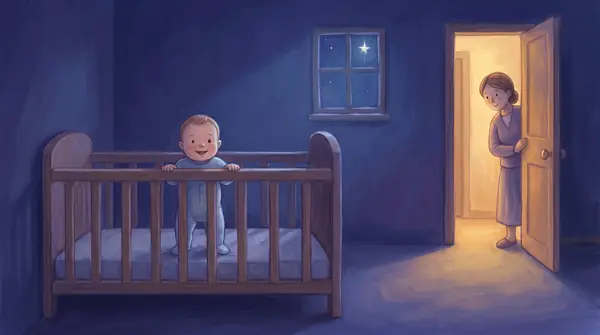
The 8-Month Sleep Regression: Signs and What Helps
Crawling, pulling to stand, and separation feelings can shake sleep around eight months. What to expect and what actually helps.
Wake Windows by Age: Newborn to Toddler Chart
Typical wake windows by age — 30–90 minutes for newborns up to 3–4 hours by 12 months — plus sleepy cues to watch and how to adjust when naps run long.