How to Swaddle a Baby: Technique, Safety, and When to Stop
Swaddling can be a genuinely helpful sleep tool for many newborns, but it comes with real technique and timing rules worth knowing before you start.

Safe sleep reminder: Always place baby on their back to sleep, on a firm, flat sleep surface in their own crib, bassinet, or play yard, with a fitted sheet only and no loose blankets, pillows, bumpers, stuffed animals, or other soft items.
What swaddling actually does
Swaddling is simply the practice of wrapping a baby snugly in a blanket to recreate the close, contained feeling of the womb. Done well, it tends to show up in two ways: the wrap stays secure, it helps calm fussiness, and it may improve sleep. It works through two separate mechanisms. First, the snug pressure can be soothing in itself, mimicking the tight quarters baby just spent nine months in and potentially reducing how often they stir. Second, and often more noticeably, it limits the Moro (startle) reflex — the sudden arm-and-leg extension a baby makes when they feel like they’re falling. It is at its strongest in the first month, begins easing off from around the 2-month mark, and it’s a common reason light newborn sleep gets interrupted before a baby even fully wakes up.
It’s worth naming the tradeoff plainly: the same reduced arousal that can help a baby sleep more soundly is also considered a possible contributing factor in SIDS risk. That doesn’t mean swaddling is unsafe when done correctly — it means the safety rules below aren’t optional extras, they’re the reason swaddling can be done responsibly at all.
How to swaddle: the classic 5-step wrap
A blanket swaddle is easiest to learn as five steps:
- Lay the blanket flat in a diamond shape and fold the top corner down to make a straight edge.
- Lay your baby face-up on the blanket with their head resting just above that folded edge.
- Bring one arm gently to your baby’s side, then pull that side’s blanket corner across their body and tuck it snugly under their back.
- Bring the bottom corner up over baby’s feet and tuck it into the fold at the top, making sure the legs stay bent up and out — like a frog — with room to move, not pinned straight.
- Bring the remaining arm down to baby’s side, wrap the last corner across the body, and tuck it at the back to secure everything.
For babies who resist having both arms pinned, an arms-out (or arms-up) swaddle is a common adaptation — the body stays wrapped while one or both arms are left free. Ready-made swaddle blankets with zippers or velcro closures are another option if the folding technique doesn’t click right away; they don’t require mastering the fold and many parents find them faster for middle-of-the-night changes. One product category to actively avoid is the weighted swaddle — these are not recommended and are not considered safe, regardless of how calming they claim to be.
Getting the fit right — the safety essentials
Three things matter most for a safe swaddle, and they’re worth checking every single time:
- Snug, not tight. You should be able to fit 2-3 fingers of space between your baby’s chest and the fabric. Tighter than that restricts breathing room; looser than that risks the wrap coming undone.
- Hips and legs free. The legs need room to bend up and out into a natural, frog-like position rather than being pressed straight and bound tightly together. A swaddle that forces the hips into a straight, tucked position raises the risk of hip dislocation or hip dysplasia over time — this is a real, well-documented risk, not a minor styling preference.
- Back sleep, own sleep space, no loose bedding. A swaddled baby should always sleep on their back, be monitored during sleep, and be placed in their own separate, firm, flat sleep space free of pillows, loose blankets, bumpers, or stuffed items — the same safe sleep rules that apply to every baby, swaddled or not. If you ever bed-share (which isn’t recommended), the swaddle should come off entirely first, since it further increases the risks already associated with bed-sharing.
Overheating is the third major risk category alongside suffocation and hip issues. Watch for sweating, damp hair, flushed cheeks, heat rash, or rapid breathing — these are signs your baby is too warm, which is itself a known SIDS risk factor. As a general guide, a thin cotton swaddle blanket over a short-sleeve onesie works well in a warmer room, while long-sleeve pajamas underneath the swaddle make more sense in a cooler one.
A loose or half-undone swaddle deserves its own mention: it’s not just ineffective, it’s a safety concern, because loose fabric in the crib raises the risk it could end up covering your baby’s face. If a swaddle regularly comes apart overnight, that’s a sign to re-check your technique or consider a ready-made wrap with a more secure closure rather than letting it stay loose.
Starting out
There’s no need to wait — swaddling can begin on a baby’s very first day of life, and hospital nursing staff will often walk you through the technique before you’re discharged. It tends to go more smoothly when you introduce it while your baby is calm, fed, and relaxed rather than already upset and squirming. Practically speaking, having 4-8 swaddle blankets on hand makes laundering and spit-up changes easier, though this is a convenience choice, not a safety requirement — inexpensive muslin or cotton blankets work just as well as premium ready-made options.
Knowing when the swaddle has to go
This is the one rule that isn’t flexible: the moment your baby looks like they are trying to roll, the swaddle comes off — and some babies start working on that at about 2 months. A swaddled baby who rolls onto their stomach loses the ability to move their arms to reposition or push themselves, which is a serious safety risk.
Watch for these early signs of rolling readiness:
- Rocking back and forth from side to side, again and again
- Tipping partway over onto a shoulder or a side
- Hips turning one way while the chest and shoulders turn the other
- Swinging a leg up and across the other one
Most babies transition out of the swaddle somewhere around 2-3 months of age, though every baby moves at their own pace, and some show these signs earlier or later. The moment you notice any of them, stop swaddling completely and immediately — even if you were in the middle of a gradual transition plan.
When your baby fights the wrap
It’s genuinely common for some newborns to dislike being swaddled, and it’s important to know upfront: swaddling isn’t mandatory for good sleep. Plenty of babies sleep just fine without it. If your baby seems to fight the wrap, a few things are usually at play:
- Technique issues — too loose feels insecure and unstable; too snug at the hips or shoulders is simply uncomfortable.
- Timing — wrapping baby once they’re already overstimulated or worked up tends to go worse than wrapping while they’re still calm.
- Temperature — being too warm or too cool inside the wrap.
- A preference for free limbs — some babies just want their hands available, full stop.
- Developmental readiness — around 2-3 months, many babies increasingly want their hands free or are gearing up to roll.
There’s a useful distinction between a baby who’s fussing because they dislike the sensation of being contained versus one who’s uncomfortable because something about the wrap itself is wrong. Signs pointing toward simple resistance to being wrapped include crying or fussing right after being swaddled, squirming or working to break free, and calming down quickly once unwrapped. Signs pointing toward a genuine fit problem are more physical: redness or irritated skin on the chest, arms, or legs, or hips and legs that seem restricted and can’t move naturally. The second category is worth adjusting your technique for immediately, not just soothing through.
A simple way to test which one you’re dealing with: pause partway through wrapping and free one or both arms. If your baby visibly relaxes, that’s a good sign they’re telling you they want more mobility rather than rejecting the swaddle concept entirely — an arms-out swaddle or a transitional product may be the fix rather than giving up on containment altogether.
Alternatives if swaddling isn’t working
If your baby consistently resists the wrap, there’s no need to force it. A few well-supported alternatives:
- Sleep sacks (wearable blankets). These keep a baby warm without restricting arm movement at all, and unlike swaddles, they remain safe to use well past infancy — many brands make toddler sizes up to 5T.
- Contact napping. Some babies settle best sleeping on a caregiver’s chest or in arms while the caregiver stays awake and alert. If you do this, stay in a safe position — a chair or a bed with a firm, flat surface, never a couch or recliner, which raises suffocation risk. When it’s time to transfer baby to their own sleep space, wait until their breathing has slowed and their limbs feel relaxed before setting them down.
- White noise. Mimicking womb sounds can help some babies fall asleep faster and stay asleep longer, though it doesn’t offer the physical warmth and pressure of a swaddle.
- Gentle massage and skin-to-skin contact. Both have documented calming benefits — infant massage can ease a baby toward restful sleep, lower stress hormones, relax muscles, and support digestion, while skin-to-skin (kangaroo care) helps regulate heart rate, temperature, and stress levels while also supporting bonding.
A simple calming routine before sleep — dimming the lights, a feed, a diaper change, swaddling if your baby tolerates it, some gentle rocking or swaying, and a soft lullaby or hum — can help even a swaddle-resistant baby wind down, whether or not the wrap itself makes the final cut.
How to transition out of the swaddle
Once your baby starts showing rolling signs — or even just starts consistently breaking free, resisting the wrap, or bringing hands to their mouth to self-soothe (common from around 3 months on) — it’s time to move away from swaddling for good. There are a few common approaches, and none is universally “correct”:
- Cold turkey. Stop swaddling all at once. This tends to suit calm, easygoing babies who aren’t heavily dependent on the sensation.
- Gradual arm removal. Free one arm for a few days, then both arms, then eventually remove the swaddle from the legs too — following whatever guidance came with your particular swaddle product for one-arm-out use.
- Wean at bedtime first. Remove the swaddle (or part of it) only at bedtime, re-swaddling after a night waking if needed, and hold off on changing daytime naps until nighttime has settled.
If you’re choosing where to start, bedtime tends to go more smoothly than naps, since sleep pressure is naturally higher at the end of the day. Once nights have adjusted, apply the same change to the first nap, then work through the rest of the day’s naps. A rocky stretch of one to two weeks — with some fussier nights — is a typical adjustment period, not a sign anything’s gone wrong. Extra soothing during this window (rocking, white noise, a calming hand resting on the chest) can help bridge the gap. Transitional swaddle or sleep-sack products with removable arm panels can also ease the shift for babies who still want some containment but are outgrowing the full wrap. If sensitivity to fabric seems to be part of the picture, gentler breathable materials — organic cotton, bamboo, or soft merino wool — are worth trying.
One safety note carries through the entire transition: if your baby shows any signs of rolling at any point in this process, stop swaddling immediately and completely, even mid-plan. And weighted swaddles or other weighted sleep items aren’t recommended at any stage of a transition, no matter how a product markets itself as “gentle.”
The upside once the swaddle is gone: your baby’s hands become newly available for self-soothing, and it’s common to see new habits — sucking on hands, bringing them to the face — emerge fairly quickly as arms become fully free to explore.
Safe sleep, every night, whether swaddled or not
Regardless of where your baby is in their swaddle journey, the same safe sleep foundation applies: back sleeping, a firm and flat surface, and a sleep space clear of loose blankets, pillows, and soft or stuffed items until 12 months of age. Room-sharing without bed-sharing for at least the first six months is also worth building into your setup — it keeps nighttime care easy while giving your baby their own safe space to sleep in.
When to reach out
- Redness or irritation on the chest, arms, or legs that lingers after unwrapping, or hips/legs that seem restricted and don’t move naturally — worth a pediatrician check to rule out a fit issue affecting the hips.
- Signs of overheating during sleep — sweating, damp hair, flushed cheeks, heat rash, or notably rapid breathing.
- Any concern that your baby’s hip movement looks different from one side to the other, or looks limited compared to what feels typical.
- If your baby is showing clear signs of rolling but you’re unsure how to safely adjust their sleep setup in the moment.
Sources
Written from primary pediatric sources. This is general information, reviewed editorially rather than by a clinician — it isn’t a substitute for your pediatrician’s advice about your child.
- American Academy of Pediatrics (HealthyChildren.org) — Swaddling: Is it Safe for Your Baby?
- American Academy of Pediatrics — Sleep-Related Infant Deaths
- American Academy of Pediatrics (HealthyChildren.org) — How to Keep Your Sleeping Baby Safe: AAP Policy Explained (A Parent's Guide to Safe Sleep)
- International Hip Dysplasia Institute — Hip-Healthy Swaddling
Keep reading

Safe Sleep for Babies: Crib Setup, Position, and Temperature
A safe sleep space is simple: a bare, firm crib, back-sleeping every time, and a comfortably cool room. The AAP guidance, explained calmly.

Newborn Sleep Schedule: Birth to 12 Weeks
Newborn sleep runs on hunger and wake windows, not the clock. What a typical day looks like from birth to 12 weeks — and what not to worry about.
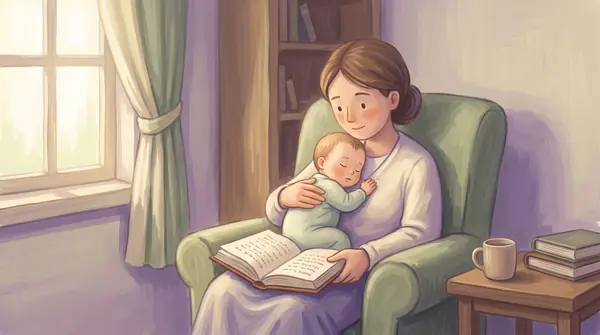
Contact Napping: When It's Okay and How to Transition
Contact napping is normal and often valuable. When it's safe, when it works for your family, and how to move naps to the crib gently when you're ready.